
How do I know if I have Gum Disease?
When a patient visits us for a routine hygiene exam, one of the main things we look for is periodontal disease. We use a special tool to check for deep pockets around at the gum line where bacteria can gather and grow. We check for other warning signs as well, which you can also check for at home:
- Red, tender, swollen gums
- Blood after brushing or flossing
- Persistent bad breath
- Loose teeth
- Receding gums
Factors that may influence the development of gum disease include poor oral hygiene, diabetes, smoking, and hormonal changes. It can also be hereditary.
What do I do if I have Periodontal Disease?
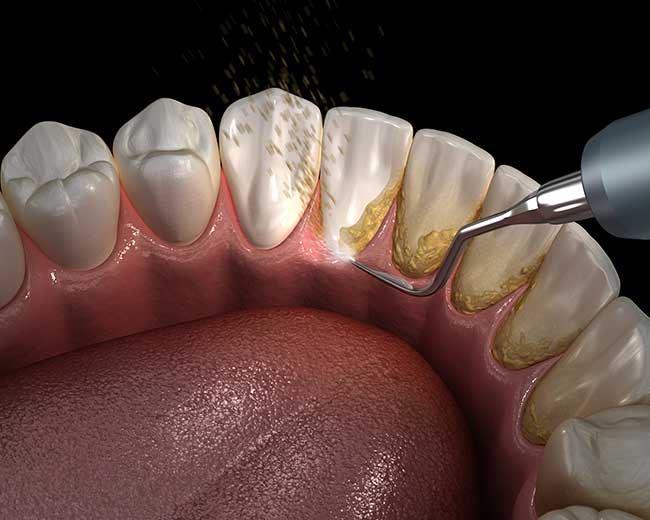
If we determine that you have periodontal disease, your teeth will require a deep cleaning to get them back to a healthy state. From there, a diligent home care routine and regular hygiene visits should be enough to keep the disease from progressing any further. However, if periodontal disease is very advanced, surgery may be necessary to fully treat the problem.
Treatment includes:
- Supragingival Cleaning: Routine type cleaning to rid the area above the gum line of calculus and plaque.
- Scaling: Deep cleaning where bacteria and calculus are removed from below the gum line and from inside pockets in the gums.
- Root Planing: Dr. James uses special tools to smooth the roots of the teeth to prevent bacteria from accumulating.
- Medication: An antibiotic is applied to gum pockets to promote healing and relieve discomfort.
Periodontal maintenance is important following gum disease treatment. You will need follow-up X-rays and examinations to determine the progression of gum recession and bone loss. You may need to visit the dentist three or more times a year to ensure that periodontal disease remains under control.
Don’t Ignore the Signs! Talk to Dr. James About Gum Disease
Without treatment, gum disease will continue to harm your teeth and gums, eventually causing tooth and bone loss. Infection can leak to other parts of your body and lead to serious health problems. Though it is not possible to completely reverse gum disease, periodontal maintenance can keep it from worsening.
If you are concerned about the state of your gums or you have been diagnosed with periodontal disease, visit us for an exam and a personalized treatment plan to help you take control of your oral health.